 B6 Brief
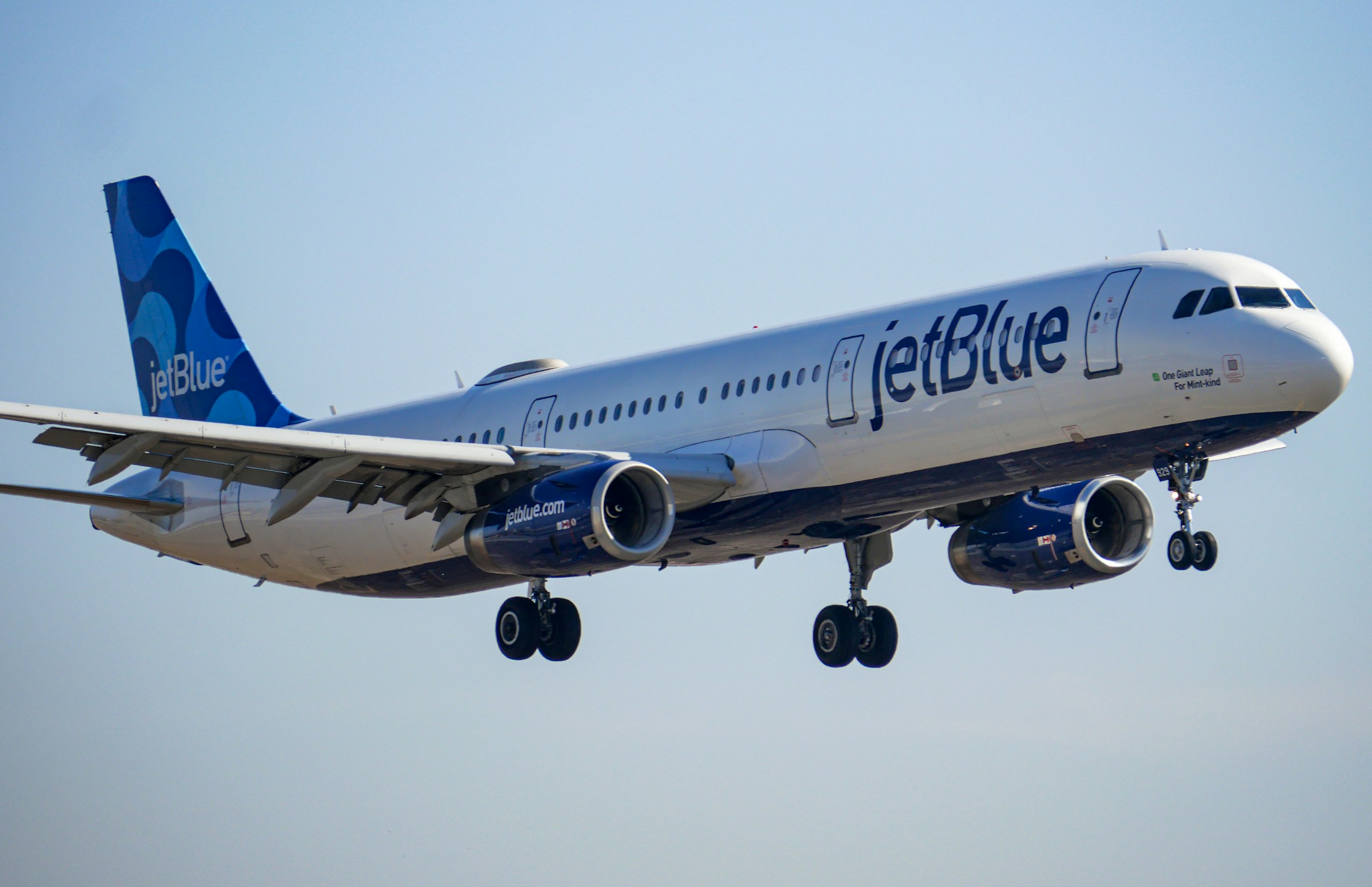
The following is a differences refresher if you find yourself assigned to a NEO aircraft.
As always, any JetBlue provided training information has priority over anything you may read here.
The Spring 2019 QDL has a very good NEO training section, as well as Flt Ops Bulletin 2019-BLTN-F018. These graphics were provided by JBU.
Delivery Schedule
| 2019 | 5 |
|---|---|
| 2020 | 12 (??) |
| Through 2024 | 80 |
Engines
- P&W 1133GA-JM
- 33,000 lbs thrust.
- N1 replaces EPR.
- Packs and anti-ice status are displayed just above N1. (Dual Cooling is not available below an oil temp of 15°C / 59°F)
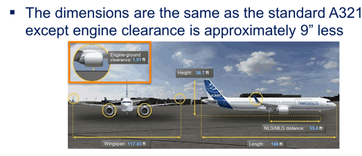
- Engine clearance is 9″ less. (Thanks to Captain Owen Clifton CK for researching this limitation)
- Normal FADEC-controlled engine starting.
- FADEC must be powered to view oil quantity. (14 qts min. With OAT less than minus 30°C, 16.5 qts min)
- An automatic dry crank for cooling may occur prior to the start.
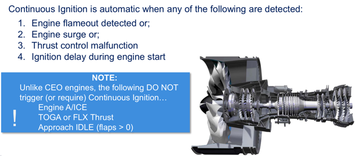
Dual Cooling Button
Allows dry crank temperature stabilization and cooling of both engines at once.
- Press the Dual Cooling button, then start engine 1. (No need to dual cool for an expected taxi over :20)
- Both engines will dry crank, but only engine 1 will start. COOLING 00′40″
- Only start one engine at a time, similar to current A320/321 SOPs.
- The start valve will be open for a longer period. This is normal.
Start Limits
- 35 seconds between start cycles (3 auto starts).
- 15 minute cooling after the 3rd start cycle.
- Do not engage the starter if N2 is above 20%.
- Auto ignition does not come on for anti-ice, takeoff thrust set, or flaps > 0 for landing.
After Landing
ALWAYS a 3 minute engine cooling period, even if arriving at the gate.
The beacon must remain on.
Dimensions & Weights
WV-53
| Taxi | 207,014 lbs |
|---|---|
| Takeoff | 206,132 lbs |
| Landing | 174,606 lbs |
Overwing Exits and Doors
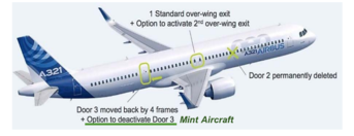
Overwing exits are always armed, just like the A320, and automatically lock during takeoff.
| 1L / 1R | Normal for all aircraft |
|---|---|
| 2L / 2R | Removed |
| OW | Same on all NEOs |
| 3L / 3R | 321 NEO High Density (Non-Mint) only |
| 4L / 4R | High Density & Mint aircraft |
Cockpit door deadbolt: used only if more than one cockpit door locking strike fails, or for failure of the locking system.
Fuel System
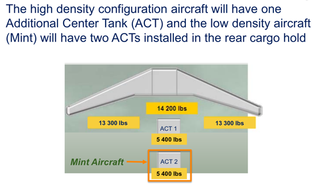
| Wing tanks | 13,000 lbs each (engines always feed from the wing tanks) |
|---|---|
| Center tank | 14,200 lbs |
| ACT 1 | 5,400 lbs |
| ACT 2 | 5,400 lbs (Mint aircraft only) |
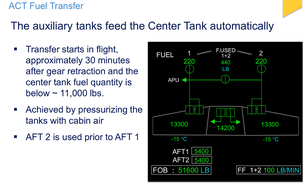
- ACT 2 is used first, then ACT 1.
- Transfers to the center tank begin approximately 30 minutes after gear retraction.
- A manual ACT transfer panel has been added to transfer fuel if directed by a non-normal checklist.
Cargo Smoke Panel
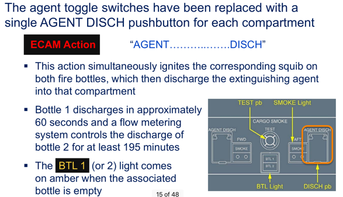
Simplified operation: ECAM directs you to press one button; the rest is automatic.
- 1 button fires 2 bottles at the same time.
- Bottle 1: 60 second quick agent discharge, to put out the fire.
- Bottle 2: 195 minute slow discharge, to keep the fire out.
- 195 minutes meets the 180 minute + :15 minute reserve ETOPS requirement.
ATSAW – Airborne Traffic Situational Awareness
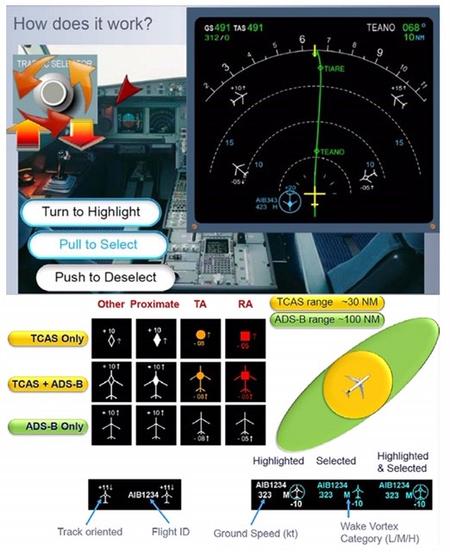
This is kind of a combined TCAS and ADS-B display.
- ND, normal TCAS symbols: that is a TCAS target only.
- Aircraft symbol overlaid with a TCAS symbol: that is a TCAS and ADS-B target.
- Use the traffic select knob next to the PFD and the MCDU TRAFF buttons to control the display and information.
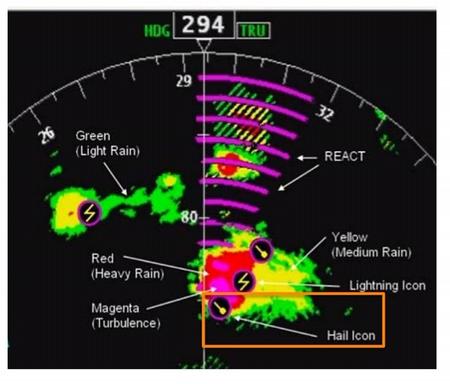
Enhanced Radar
New features:
- 60 NM look-ahead for turbulence (magenta returns).
- Hail.
- Predictive lightning symbols.
- Alerts to monitor the radar display for approaching weather.
- Enhanced predictive windshear warnings.
- Magenta arcs: REACT (area of attenuation). Possible hidden weather — avoid these areas.
Flare Law
During landing, pitch freezes (is memorized) at 100′, with no nose-down trim as on the classic aircraft. The result is a slightly lighter feel during the flare.
Soft Go-Around (SGA)
- Select TOGA (you must see GA TRK on the FMA), then select MCT.
- A 2,000 FPM climb is commanded.
- At THR RED ALT, select CLB to resume a normal climb.
Ground Speed Mini
Vapp + 1/3 (current headwind − tower reported headwind) = GS Mini
CAT II/III Wind Limitations
| Headwind | 15 knots |
|---|---|
| Tailwind | 10 knots |
| Crosswind | 10 knots |
GLS Approaches
This is a combined GPS/ILS approach, using GPS and a ground-based station.
- We are currently not approved for these approaches.
- When approved, fly a GLS just like an ILS.
CPDLC VHF Frequency Loading
(This feature may be activated in the future.)
- A new RMP has a LOAD button.
- When ATC sends a frequency change request via CPDLC, the LOAD button illuminates.
- Press LOAD to send the frequency to the STBY side of the RMP, then press XFER as usual.
- After pressing LOAD, you can close the message.
Crew Oxygen
A normal single pushbutton operates 2 O2 bottles. (They can now be refilled, rather than replaced.)